
How Smart Gadgets Are Rewriting Privacy, Justice, and Power in the Digital Age
I. Introduction
Robert and Connie were the quintessential American couple. After 10 happy years of marriage and two wonderful children, 9 and 6, a phone call that Robert made on 23rd December 2015 would shatter this façade and spotlight an unexpected witness in their tragedy: a simple fitness tracker.

Although Robert told 911 that robbers had broken into their marital home, tied him up, and killed his wife, his alibi crumbled under the weight of digital evidence from Connie’s Fitbit. This small device, worn to count steps and monitor health had been silently logging her movements leading the investigators down a completely different path from where Robert had hoped to (mis)lead them. While Robert claimed she was killed by 9:00 AM, her fitness tracker showed her moving about their home an hour after her supposed death.
Robert is now serving a 65 year prison sentence at MacDougall-Walker Correctional Institution in Suffield, Connecticut after an earth-shattering 7 year trial involving 600 exhibits and 130 witnesses and a guilty conviction over the cold-blooded murder of his wife.

As we enter 2025, we all live surrounded by such potential witnesses. Our homes pulse with smart devices – thermostats that learn our routines, speakers that answer our queries, cameras that guard our doorways, and watches that monitor our vital signs. This network of connected devices, known as the Internet of Things (IoT), was designed to make life more convenient. But it has evolved into something more profound: the Internet of Legal Things.

This transformation turns everyday gadgets into potential legal witnesses. Your smart speaker might be called to testify about ambient sounds during a crime. Your car’s computer could verify your whereabouts. Your home security system might capture crucial moments that change lives. As connected devices proliferate across the globe – with the average household now containing 15 smart devices – they’re silently collecting data that could one day become evidence in a courtroom.
Consider this: when you ask your smart speaker to play music, set a reminder, or control your lights, you’re not just interacting with a convenient tool. You’re creating a digital timestamp of your presence, your actions, and your routines. In an age where data never sleeps, every connected device becomes part of a vast digital tapestry of potential evidence, fundamentally altering the relationship between technology, privacy, and justice.
II. The Rise of the Digital Witness
The First Digital Observer
In the early 1980s, a Coca-Cola vending machine at Carnegie Mellon University quietly made history. Modified by resourceful computer scientists, it became the first device to report its contents over the internet. Their motivation was refreshingly simple: they wanted to check if cold sodas were available before making the journey to the machine. This humble beginning – born from a desire for convenience – would spark a revolution in how objects communicate with us and with each other.

From Concept to Reality
It wasn’t until 1999 that Kevin Ashton, then Executive Director of MIT’s Auto-ID Labs, gave this emerging phenomenon a name: the Internet of Things. His vision seemed almost fantastical at the time: “If we had computers that knew everything there was to know about things, using data they gathered without any help from us, we would be able to track and count everything and greatly reduce waste, loss, and cost. We would know when things needed replacing, repairing, or recalling and whether they were fresh, or past their best.”
The Explosion of Connected Devices
A quarter century later, Ashton’s “fantastical” vision has become our everyday reality – and has evolved far beyond what even he imagined. By 2023, nearly 16 billion IoT devices were quietly collecting and transmitting data worldwide. From the fitness tracker that helped solve Connie Dabate’s murder to the smart speakers that now serve as digital alibi witnesses, these devices have transformed from mere conveniences into silent observers of our daily lives.
The Data Deluge
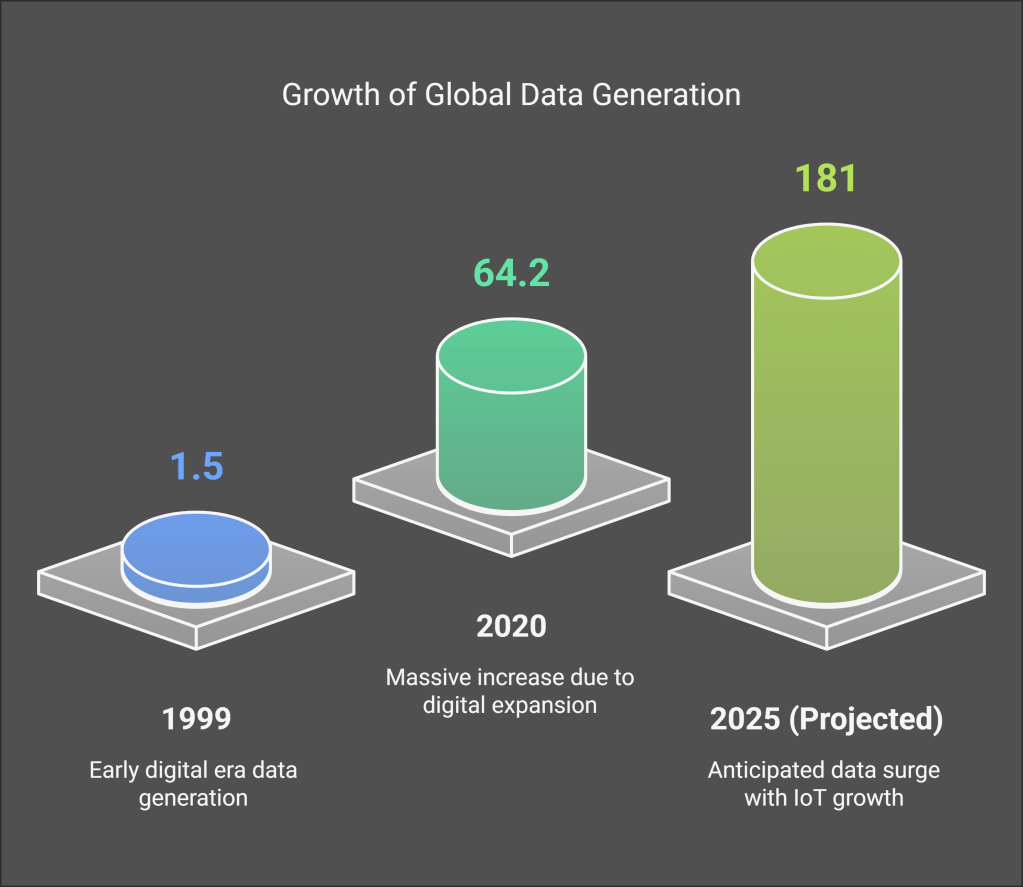
The scale of this transformation is staggering. In 1999, when Ashton coined the term “Internet of Things,” the world generated about 1.5 exabytes of unique information – roughly 250 megabytes per person, mostly through analog means. By 2020, this had exploded to 64.2 zettabytes, a 40,000-fold increase. As we approach 2025, global data generation is projected to reach 181 zettabytes, with each person generating an average of 22.6 terabytes annually – enough to fill over 4,500 DVDs with their digital footprint.
The Silent Observers: From Convenience to Evidence
This transformation extends far beyond mere numbers. Our devices have evolved from simple tools into potential legal witnesses, fundamentally altering the landscape of digital evidence. A 2023 survey by the International Association of Chiefs of Police revealed that data from IoT devices played a significant role in solving over 60% of major crimes in urban areas.
The Price of Convenience
The seamless integration of smart devices into our daily lives has introduced an often-overlooked consequence: nearly every connected gadget now serves as a potential digital witness. Projections by the International Data Corporation (IDC) estimate that by 2025, there will be over 41.6 billion connected Internet of Things (IoT) devices generating 79.4 zettabytes of data. Each of these devices collects, stores, and potentially “testifies” through its data in courts worldwide.
III. When Devices Take the Stand
Personal Devices as Legal Witnesses
Our most intimate devices have become powerful sources of evidence:
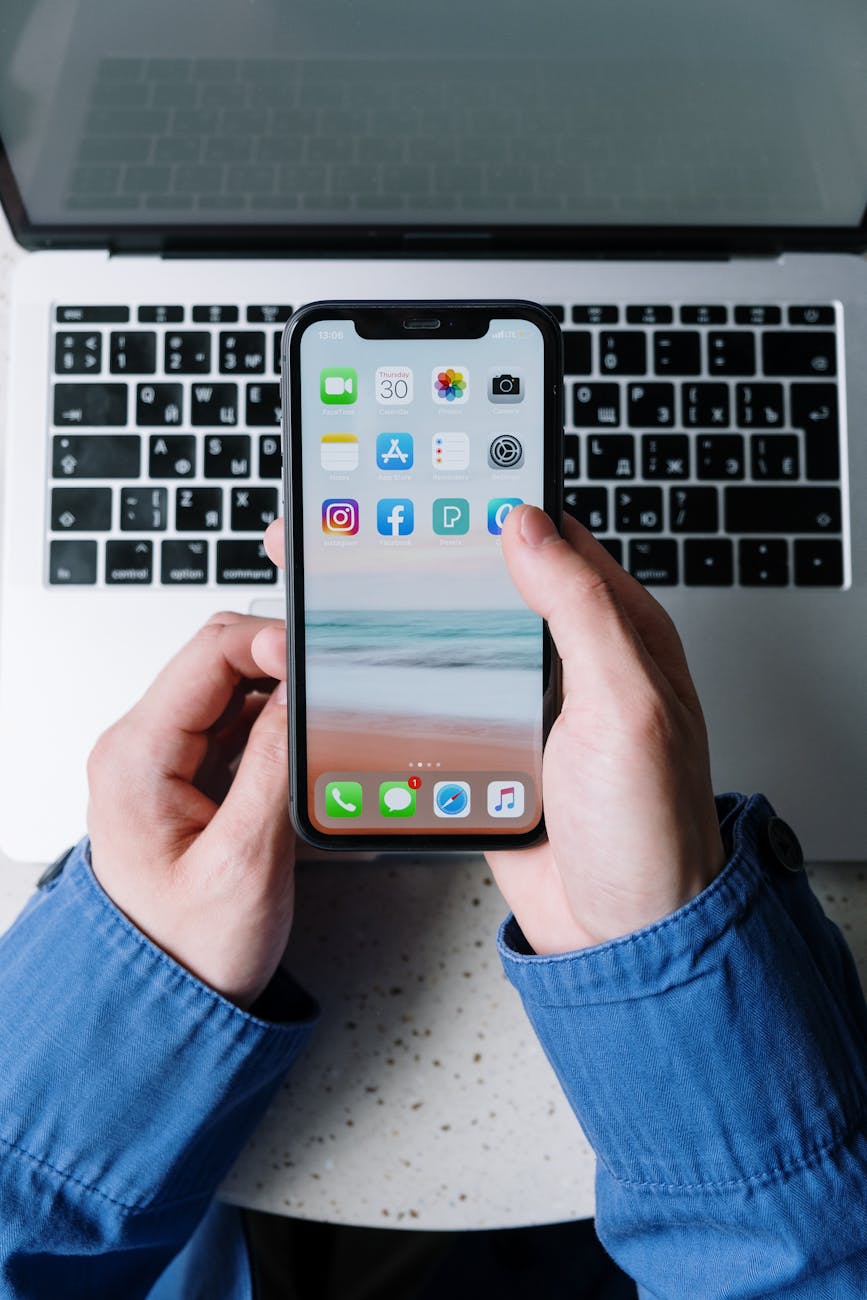
- Smartphones: Mobile device data, including location data, call logs, and messaging histories, regularly appear in courtrooms across jurisdictions.
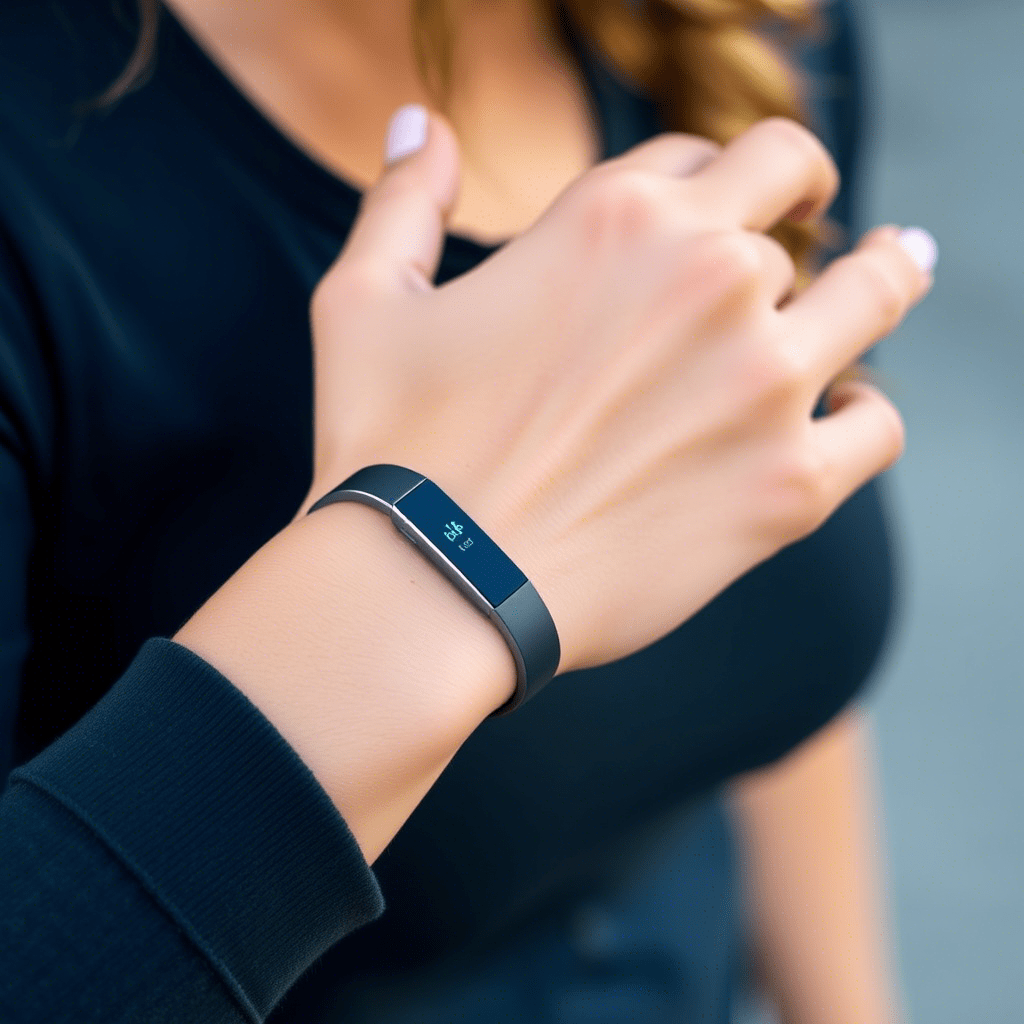
- Wearable Technology: In the Connecticut case of State v. Richard Dabate, data from a Fitbit device was pivotal in the investigation. Richard Dabate was convicted of his wife’s murder after her Fitbit data contradicted his account of events.
- Smart Home Systems: Amazon’s Echo devices, equipped with the Alexa voice assistant, have been involved in legal cases where courts requested data recordings as potential evidence. For instance, in a 2015 Arkansas case, authorities sought access to Echo recordings during a murder investigation. While Amazon initially resisted, citing user privacy concerns, the company eventually complied when the device owner consented.

The Expanding Network of Digital Evidence
Beyond personal devices, broader IoT networks are reshaping legal proceedings:
- Connected Vehicles: Tesla’s Event Data Recorders have provided evidence in accident investigations across multiple continents. The European Union’s eCall system, mandatory in all new cars since 2018, automatically records crucial data during accidents.

- Smart Infrastructure: Urban infrastructures, such as London’s extensive CCTV network and Singapore’s Smart Nation sensors, increasingly provide digital evidence in civil and criminal cases.
- Financial Technology: Digital payment platforms like Alipay, WeChat Pay, and M-PESA process billions of transactions annually, each potentially relevant in legal proceedings.
From Data to Evidence: Global Standards
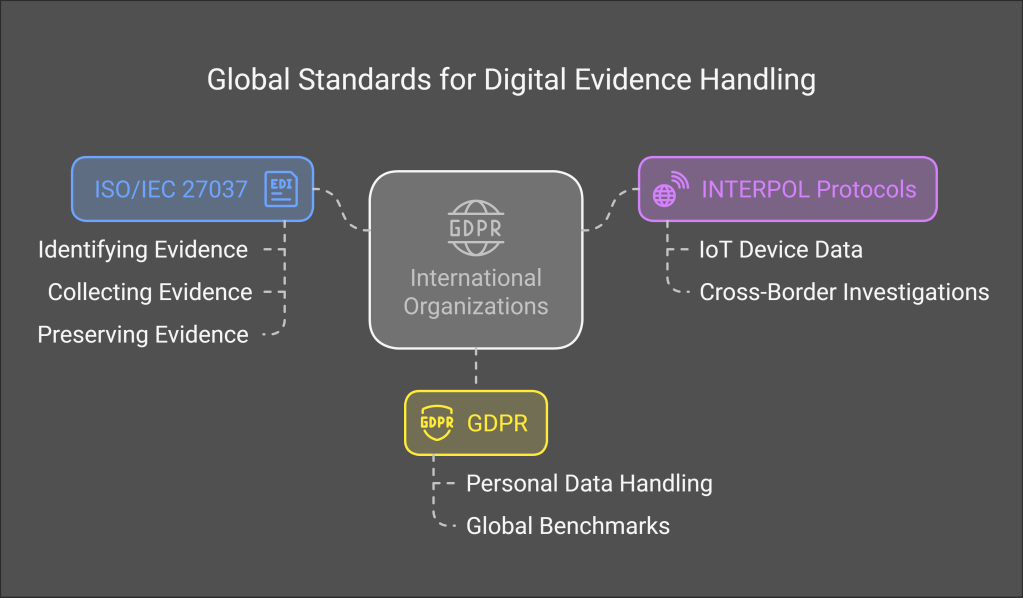
International organizations are working to standardize the handling of digital evidence:
- ISO/IEC 27037: The International Organization for Standardization (ISO) has published guidelines for identifying, collecting, and preserving digital evidence.
- INTERPOL Protocols: INTERPOL’s Global Complex for Innovation in Singapore has established protocols for handling IoT device data in cross-border investigations.
- GDPR: The European Union’s General Data Protection Regulation (GDPR) has set global benchmarks for handling personal data, including its use as evidence.
The Universal Privacy Challenge
This evolution raises consistent concerns across jurisdictions:
Authentication Challenges: Courts worldwide struggle with verifying the integrity of digital evidence, ensuring it has not been tampered with or altered.
Legal Framework Gaps: Many countries’ evidence laws were established before the advent of IoT devices, leading to challenges in their application to modern technology.
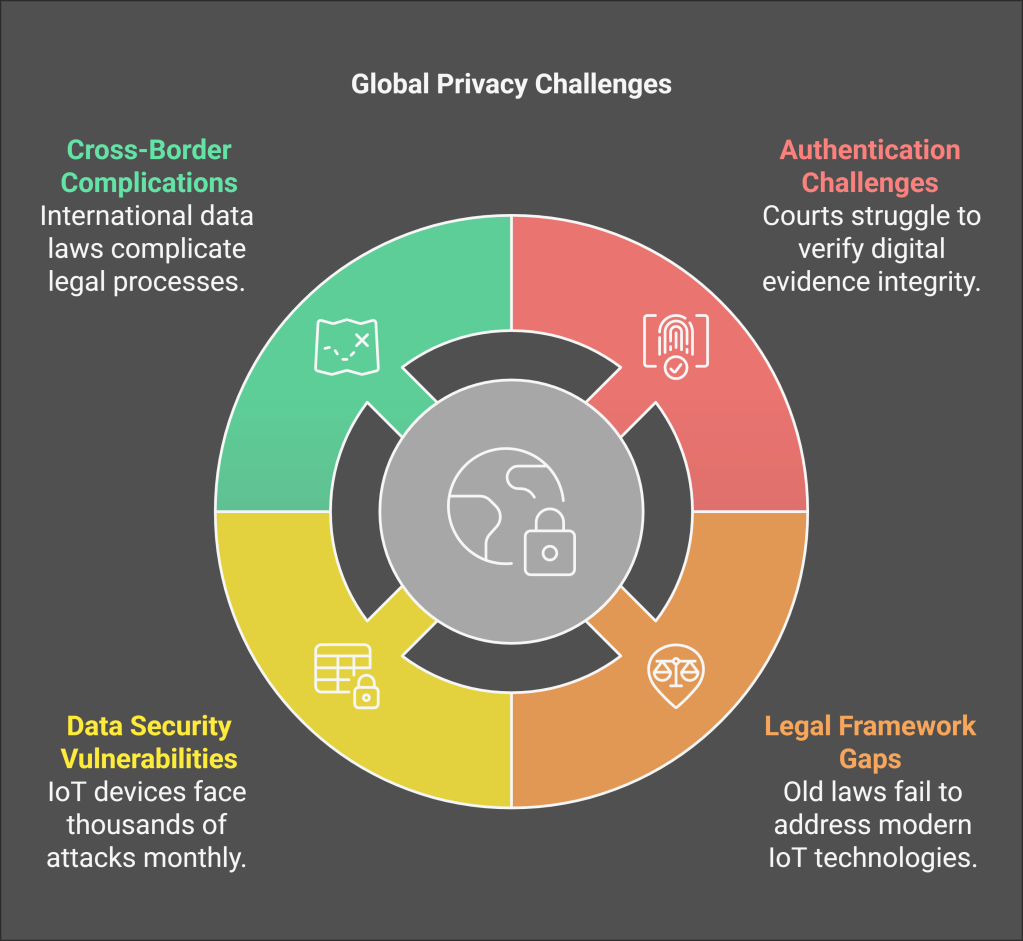
Data Security: The International Telecommunication Union reports that IoT devices face an average of 5,200 attacks per month, underscoring vulnerabilities in data protection.
Cross-Border Complications: Data stored in one country may be needed as evidence in another, complicating legal processes due to varying international laws.
III. Legal Framework and Evidentiary Challenges
The Digital Evidence Standard
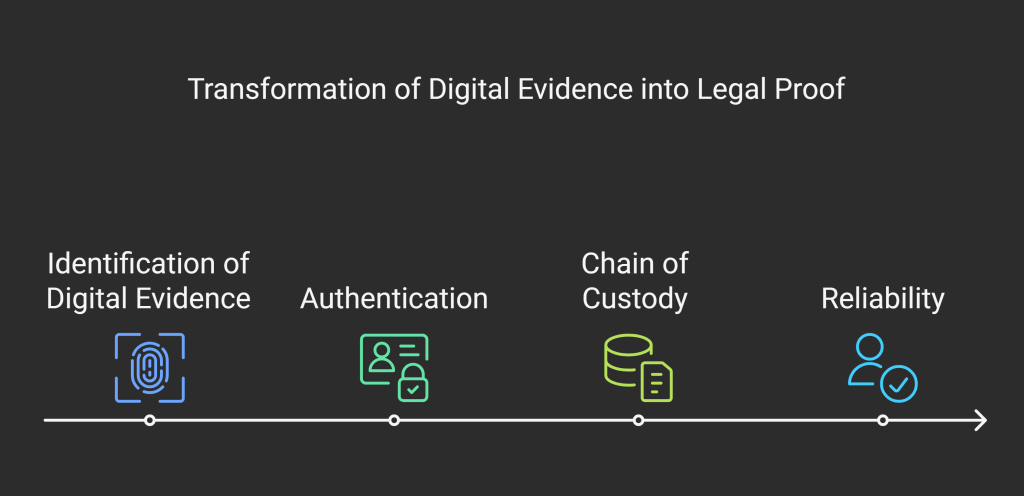
Digital evidence, from emails to IoT device data, must meet rigorous legal standards before entering the courtroom. This transformation of everyday digital traces into legal proof follows three critical pillars:
- Authentication: Verifying the evidence is genuine and unaltered
- Chain of Custody: Documenting the evidence’s journey from collection to courtroom
- Reliability: Establishing the trustworthiness of both data and collection methods
Securing Digital Truth
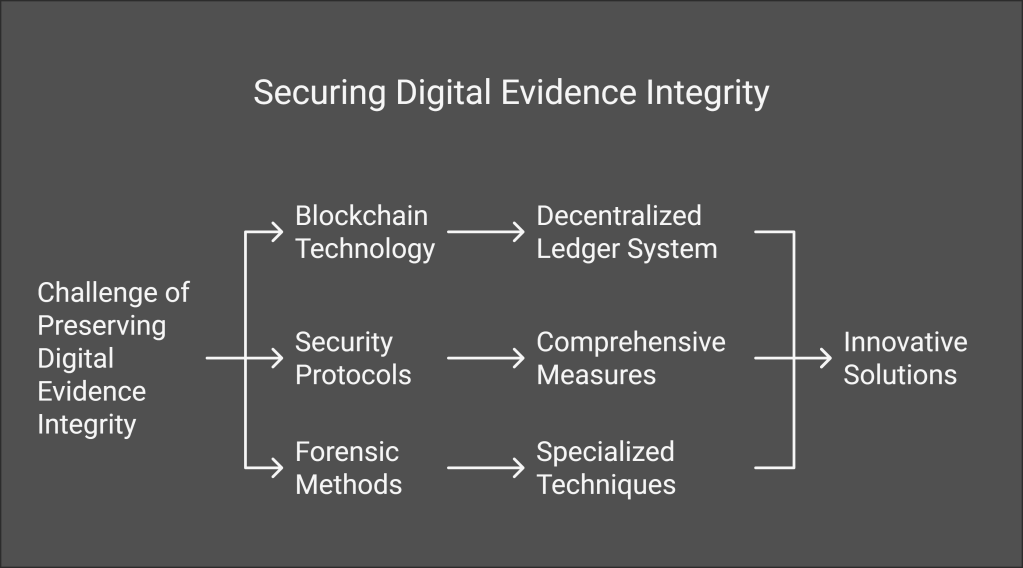
The challenge of preserving digital evidence integrity has led to innovative solutions:
- Blockchain Technology: Offers a decentralized, immutable ledger system for digital records, though experts at the World Economic Forum note it isn’t without vulnerabilities
- Security Protocols: Comprehensive measures to protect against data manipulation
- Forensic Methods: Specialized techniques for verifying digital evidence integrity
Global Legal Harmonization
As digital evidence crosses borders, legal systems worldwide face a pressing need for standardization. This includes:
- Common Admissibility Standards: Creating unified approaches to digital evidence
- International Protocols: Developing shared frameworks for evidence handling
- Cross-Border Cooperation: Facilitating evidence sharing between jurisdictions
IV. The Privacy Paradox
Living in a Glass House
Our smart homes have become more transparent than their windows. Every command to Alexa, every adjustment of our Nest thermostats, every morning weigh-in on our smart scales creates a digital echo that could reverberate in unexpected ways. A 2024 Pew Research study found that 78% of smart device users were unaware of how much personal data their devices collected, while 92% expressed concern about how this data might be used.
The Consent Conundrum
When we click “I Agree” on our device setup screens, what exactly are we agreeing to? The complexity of terms and conditions has created what privacy experts call “blind consent” – where users technically provide permission without true understanding. Recent class-action lawsuits against Apple over voice assistant recordings highlight this gap between perceived and actual privacy.
From Convenience to Surveillance
The line between helpful monitoring and harmful surveillance grows increasingly blurry:
- Home Security: When does protection become surveillance?
- Health Monitoring: Where does wellness tracking become medical profiling?
- Smart Assistants: How do we balance functionality with privacy?
V. The Road Ahead
Regulatory Evolution
As our devices become more capable witnesses, legal frameworks coupled with data ethics must evolve:
- Global Standards: The need for unified approaches to digital evidence
- Privacy Protection: Balancing investigation needs with individual rights
- Cross-Border Challenges: Managing evidence that knows no boundaries
Technical Solutions
Innovation is racing to address these challenges:
- Privacy-Preserving Technologies: Developing ways to use data while protecting privacy
- Blockchain Authentication: Creating tamper-proof digital evidence trails
- AI-Powered Anonymization: Protecting individual privacy while maintaining data utility
Conclusion: The Digital Witness Era
We stand at a crossroads where our devices have become both our servants and our observers. The Internet of Legal Things represents more than just technological advancement – it marks a fundamental shift in how we think about privacy, truth, and justice.
As we move forward, several key questions demand our attention:
- How do we preserve privacy in an age of omnipresent digital witnesses?
- What rights should individuals have over their device-generated data?
- How can we ensure that digital evidence serves justice without compromising fundamental rights?
The answers to these questions will shape not just our legal systems, but the very nature of privacy and justice in the digital age. As we continue to invite these silent witnesses into our homes and lives, we must ensure that convenience doesn’t come at the cost of our fundamental rights.
Happy week!


 Bytes of Justice
Leave a reply to Dexter Adaki Cancel reply