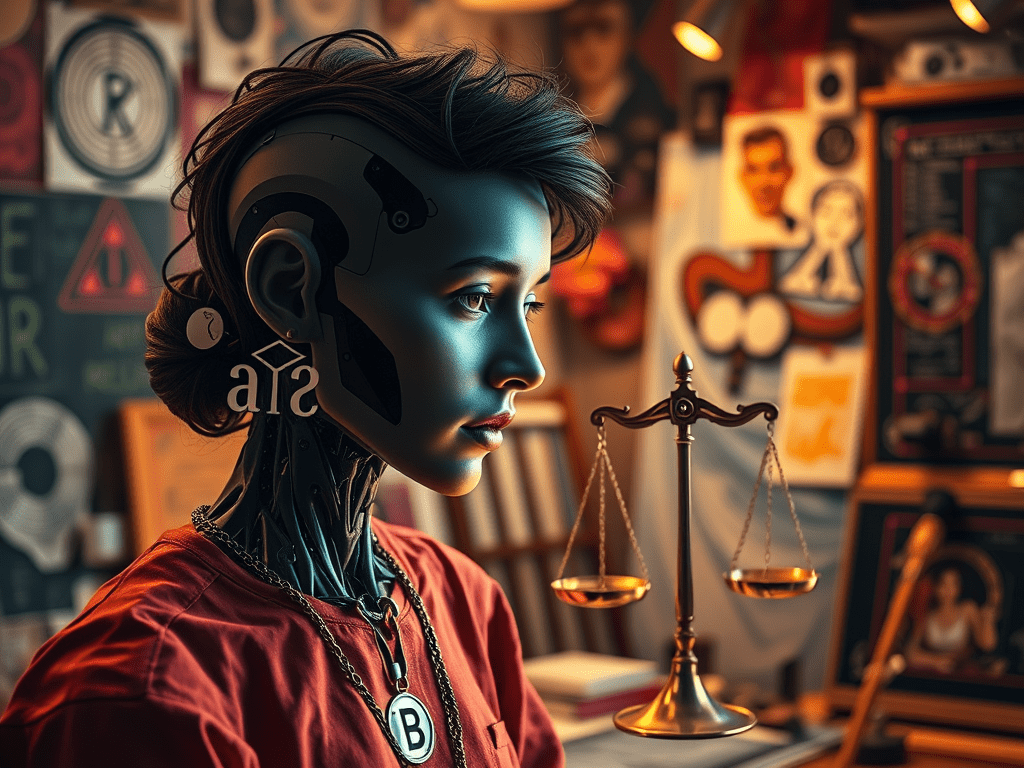
Creativity is seeing what others see and thinking what no one else ever thought ~ Albert Einstein
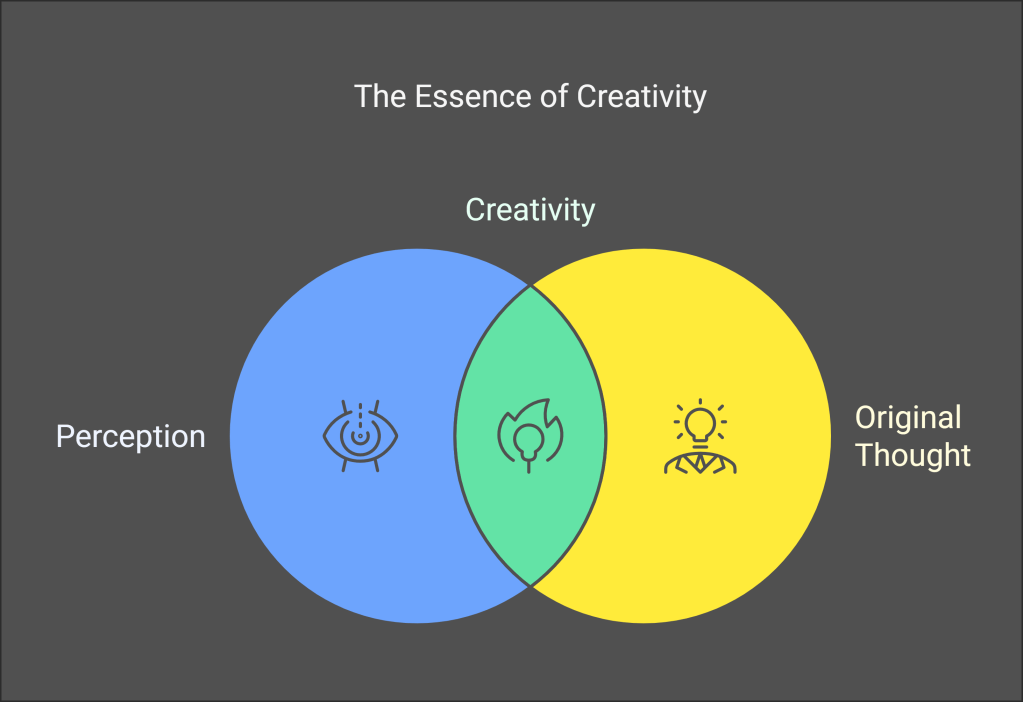
The AI Creative Revolution
Suno an AI music generation program, can create studio-quality music from simple text prompts—a capability that would have seemed impossible just a couple of years ago. This raises fundamental questions about creativity and ownership in the age of artificial intelligence: Who owns AI-generated content, and how can our legal systems adapt to protect these new forms of creative expression?
Existing laws are faced with their most interesting challenge yet. Traditional IP laws were designed to protect human authors. It was inconceivable that one day AI could do in matter of seconds what people would take days, weeks, and sometimes months to produce. How does the law adapt to this shift? It is foolish to try and ignore the reality of a world of creativity that will never be the same again. AI-generated content is already abundant on the internet, and platforms like YouTube have established regulatory frameworks rather than completely banning AI-generated content. If it is not already obvious, IP laws must evolve to embrace AI generated content.
Traditional Copyright Law: A Human-Centric Approach
Traditionally, copyright law has operated on the premise of protecting human originality. Originality was understood to represent an author’s unique creative input. The work may not have been new or unique, but it had to have the author’s stamp of originality. The work may not even have any artistic merit as was seen in the US Case of Bleistein v. Donaldson Lithographing Company where the Supreme Court led by the wisdom of the indomitable Justice Oliver Wendell Holmes Jr. found that chromolithographs, primarily used for advertising, were eligible for copyright protection under U.S. law, even though they served no artistic purpose.
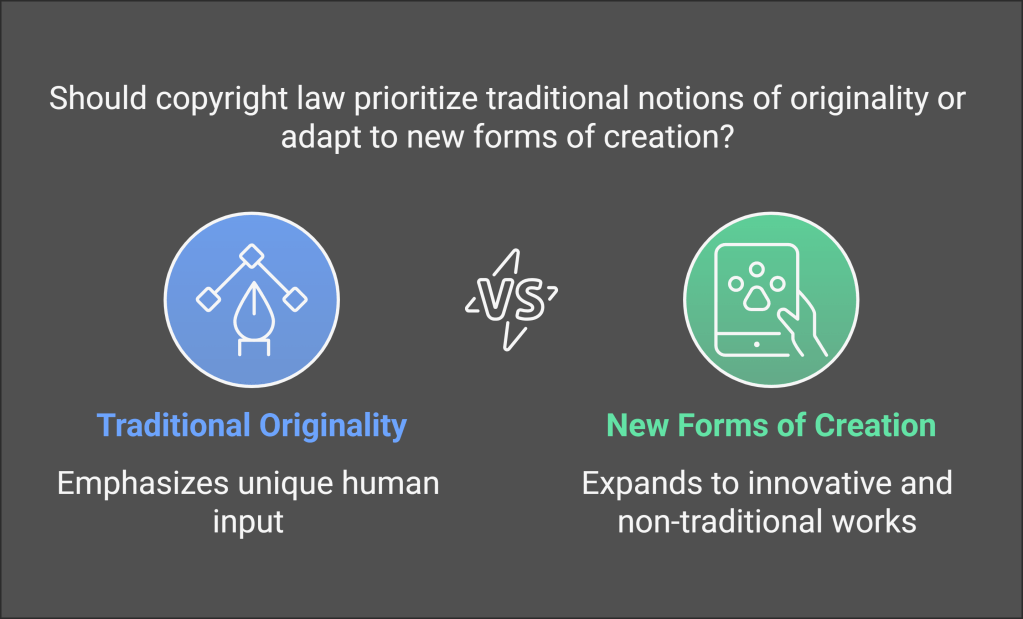
As a matter of fact, traditional intellectual property law places the human agent at the center of copyright protection. The rationale behind this is that the human agent should be able to reap the economic benefits of their creativity, and protect their long-term reputation. It is this idea that has informed the human-centric understanding of copyright law.
The AI Copyright Paradox
It is therefore completely understandable why there are many skeptics both inside and outside the legal profession who cannot help but see the many paradoxes that AI presents versus old school IP laws; Does training AI on copyrighted material constitute infringement? Can we consider AI-generated content truly original if it’s derived from existing data? When someone uses text prompts to create content, who holds the IP rights – the user, the AI tool itself, or the AI tool’s owner?
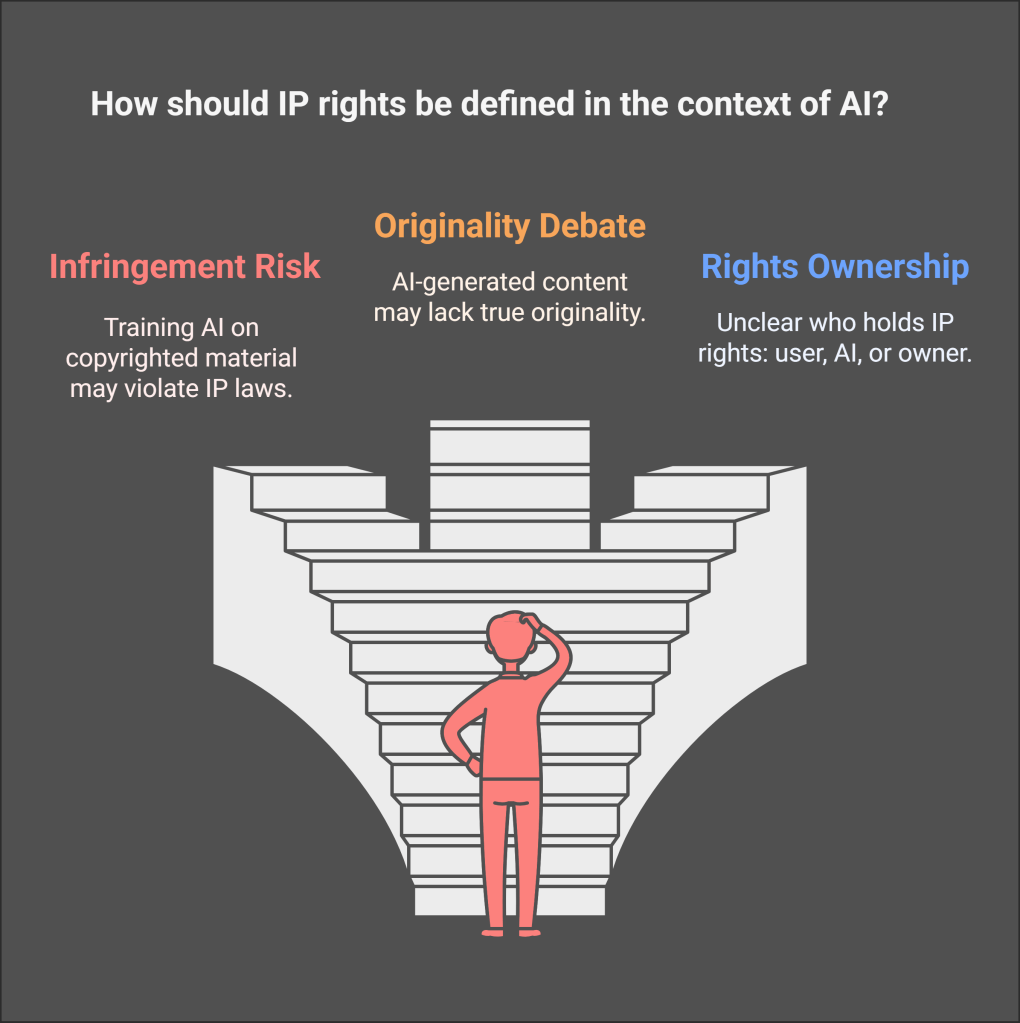
The most interesting question to my mind is the idea-expression dichotomy. Copyright is meant to protect the idea rather than the expression of the idea. An idea expressed as text prompt in ChatGPT can be said to be original and unique. But the output, the expression, is not. That dynamic completely upends traditional copyright law and makes it nearly impossible to decide whether to protect the idea or the expression.
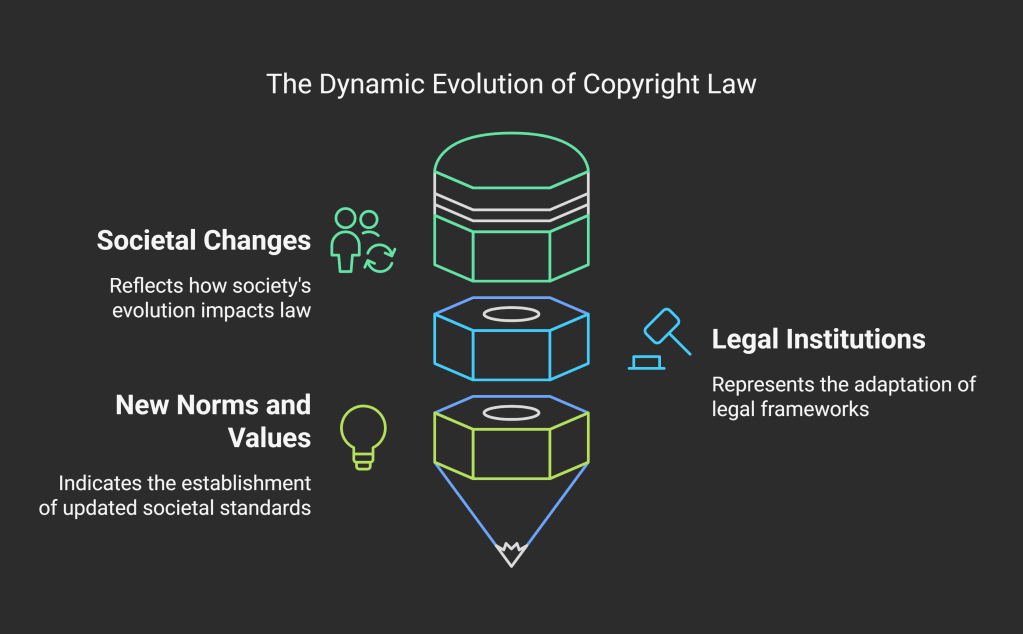
The former Attorney General of the Kingdom of Lesotho, Mr. Ts’okolo Makhethe K.C., argues that society is dynamic and continuously evolves in response to ongoing changes. In essence, for every time period, these societal changes influenced the evolution of existing legal institutions, which in turn established new norms and values aligned with the emerging society of that period. It is for this reason that copyright law must adapt to this change.
Global Legal Responses
Countries worldwide have developed varying approaches to address these challenges. While we can only examine these approaches broadly, they reveal interesting patterns in how different legal systems are adapting.
Common Law Jurisdictions
India, Hong Kong, Ireland and New Zealand have already made amendments in their laws to reflect the reality and existence of AI generated content. They have different approaches, but each of them seems to favor a hybrid approach that protects works that have some level of human involvement. India amended its Copyright Act to essentially grant the same level of protection for AI content as for other types of protected classes of works. Their commitment to protecting users’ rights is evidenced by the implementation of both civil and criminal penalties for infringement. That being said, India’s apparent magnanimity is viewed as tokenistic and performative at best with some critics seeing through what they view as perfunctory fluff since section 17 of the Indian Copyright still only recognizes human authors anyway, locking out most, if not all AI “authors”.
This approach mirrors what Hong Kong, Ireland, and New Zealand are attempting: appearing progressive while maintaining fundamentally conservative positions.
The American Approach
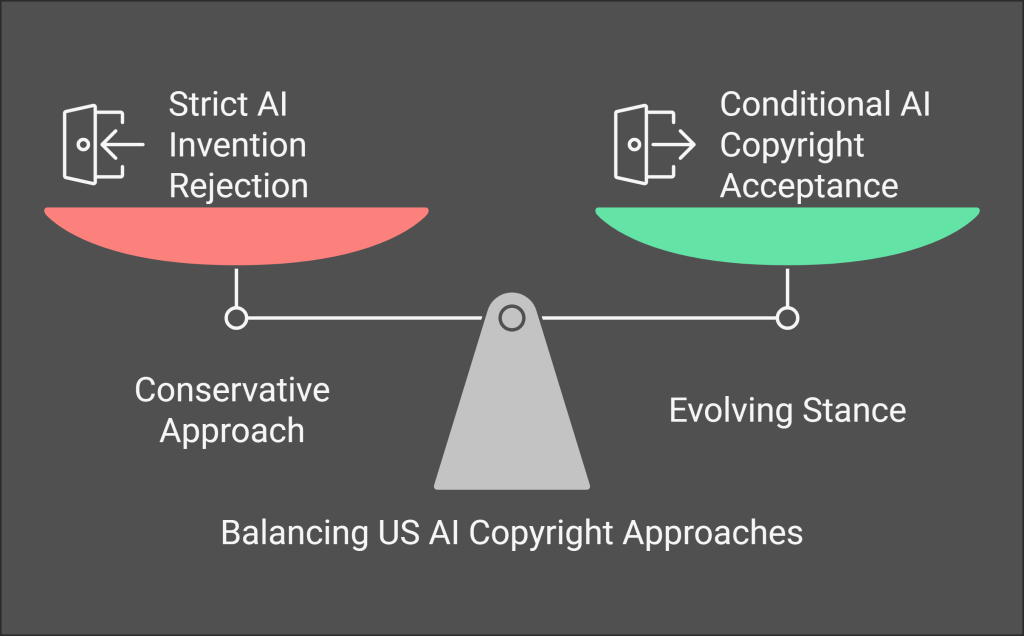
The United States, the hub of most AI giants has taken the firmest stance against AI generated content. The most significant decision emerging out of US Courts is Thaler v. Hirshfeld where appeals to the Federal Circuit all failed. The courts resolutely affirmed the United States Patent and Trademark Office (USPTO) decision to reject the registration of DABUS, an AI system capable of generating inventions
This decision underscored the American commitment to maintaining a very conservative stand. It remains to be seen whether this hard line will remain because recently the US Copyright office relented a bit. According to a very recent report, the US copyright office may be willing to entertain applications for protection of AI generated content if there is sufficient human involvement, or as they put it, if there is a perceptible sense of the “centrality of human creativity.”
European Union’s Strategy
The EU, known for proactive tech regulation followed its successful General Data Protection Regulation with the EU AI Act, approved in March 2024, which is expected to become a global benchmark. While this law does not actually address copyright issues, it does place strict conditions on AI inventors and founders to avail a summary of their training data used. This is interesting when an Open AI developer openly admitted that they utilized copyrighted material in training their large language models. Many prominent AI companies now face legal challenges regarding their use of copyrighted training data.
That being said, the EU seems to still be grappling with this issue. The EU AI Act is aligned with the Copyright in the Digital Single Market (CDSM) Directive which seems to protect the original author whose work is used to train a large language model, that is then used to generate AI content. This raises a crucial question: if AI systems inevitably incorporate copyrighted material in their training, can any AI-generated content be considered truly original? This circular reasoning brings us back to our original question: how do we define originality in an AI-augmented creative process?
The Chain of Creation Complexity
The real problem that all legislators around the world must confront while attempting to craft laws, is the chain of creation complexity. When we talk about AI-generated content, we’re actually discussing a complex chain of creation that involves multiple stages and players. It starts with massive data collection and curation, where training datasets are assembled from various works – many of them copyrighted. This data then feeds into the model development phase, where engineers and researchers craft the AI’s architecture and training algorithms. While these technical components aren’t typically considered creative works themselves, they’re crucial tools in the generative process.
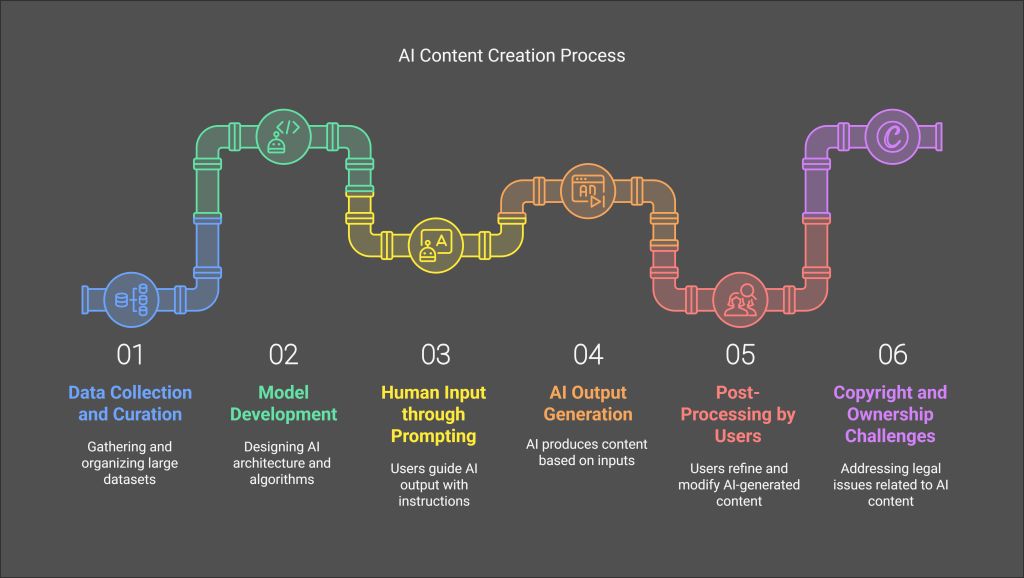
The chain continues with human input through prompting, where users provide instructions that guide the AI’s output. This interaction raises interesting questions about authorship and creativity – how much human input is needed for something to be considered a human-authored work? The final stage involves the AI generating its output and potential post-processing by users. This multi-layered process creates significant challenges in determining ownership and copyright, especially when AI-generated content closely resembles elements from its training data. Some experts suggest using blockchain technology to track these creative contributions, potentially offering a solution for fairly attributing rights and responsibilities along this complex chain of creation.
Future Implications and Solutions
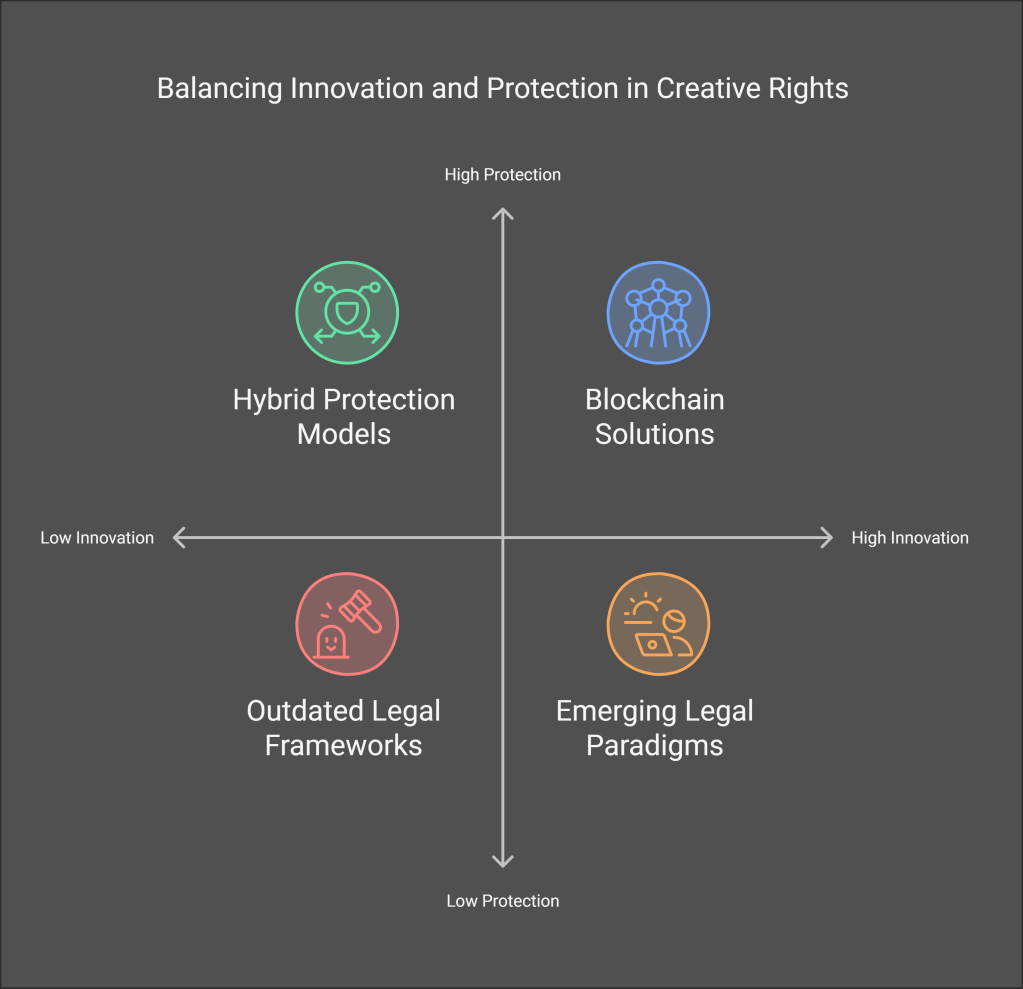
As we stand at this technological crossroads, the future of creative rights demands a delicate balance between fostering innovation and protecting human creativity. While blockchain technology and hybrid protection models offer promising solutions, the true challenge lies in crafting flexible legal frameworks that can evolve alongside AI capabilities. The next decade will likely see the emergence of new legal paradigms that recognize both human and artificial contributions to creative works, fundamentally reshaping our understanding of originality and authorship in the digital age.
Happy Week!


 Bytes of Justice
Leave a reply to HT Cancel reply